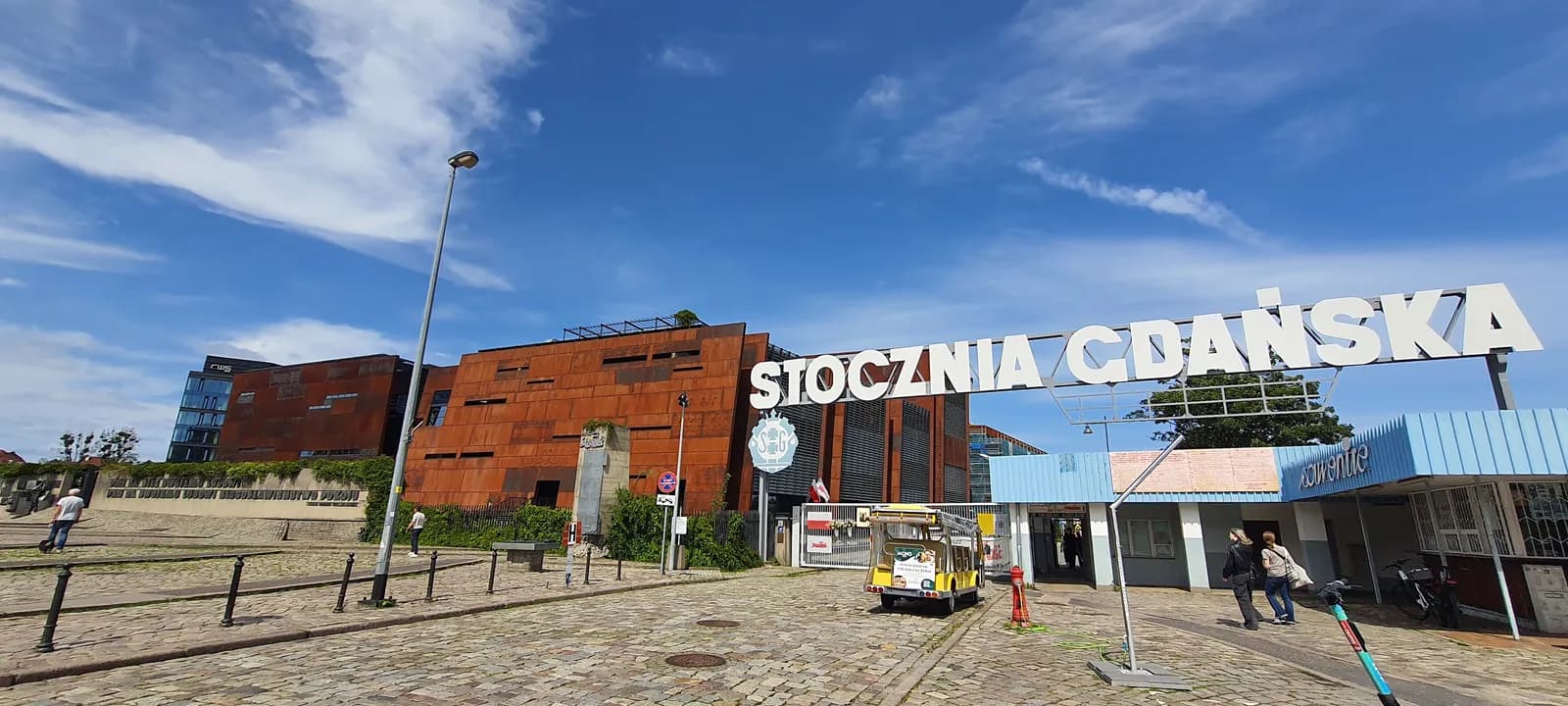
There are places in Gdańsk where the past feels unusually close. At the European Solidarity Centre, history is not confined to glass cases and old photographs. It begins outside, at the gates of the former shipyard, and continues through the streets and buildings where workers, families and supporters gathered during some of the most important events in modern Polish history.
The European Solidarity Centre, or Europejskie Centrum Solidarności, tells the story of the Solidarity movement, the Gdańsk Shipyard and the political changes that eventually brought an end to communist rule in Poland.
It is one of the best places in the city to understand how Gdańsk became associated with a movement whose influence reached far beyond Poland.
A museum built beside the place where it happened
The shipyard's history stretches back well before the events of 1980.
Shipbuilding developed in this part of Gdańsk during the 19th century, and the yards became an important part of the city's industrial landscape. After the Second World War, the shipyards were rebuilt and became a major workplace in the city.
By the second half of the 20th century, thousands of people were employed there.
That industrial community would become central to a much bigger story.
The museum also explores this wider history through its exhibition THE SHIPYARD: Man. Industry. City, which looks at more than 150 years of shipbuilding and the relationship between the shipyard and Gdańsk.
This provides useful context. The shipyard was not simply the setting for a political protest. It was a workplace that had shaped the city and generations of its residents.
December 1970 and the memory of the shipyard workers
One of the important chapters leading towards Solidarity took place in December 1970.
Workers in several Polish cities protested against price increases and deteriorating living conditions. In Gdańsk, demonstrations centred on the shipyard and surrounding streets.
The authorities responded with force. Workers were killed and many others were injured.
The events left a lasting mark on the city's working population. A decade later, the memory of those killed would become part of the demands made by striking workers.
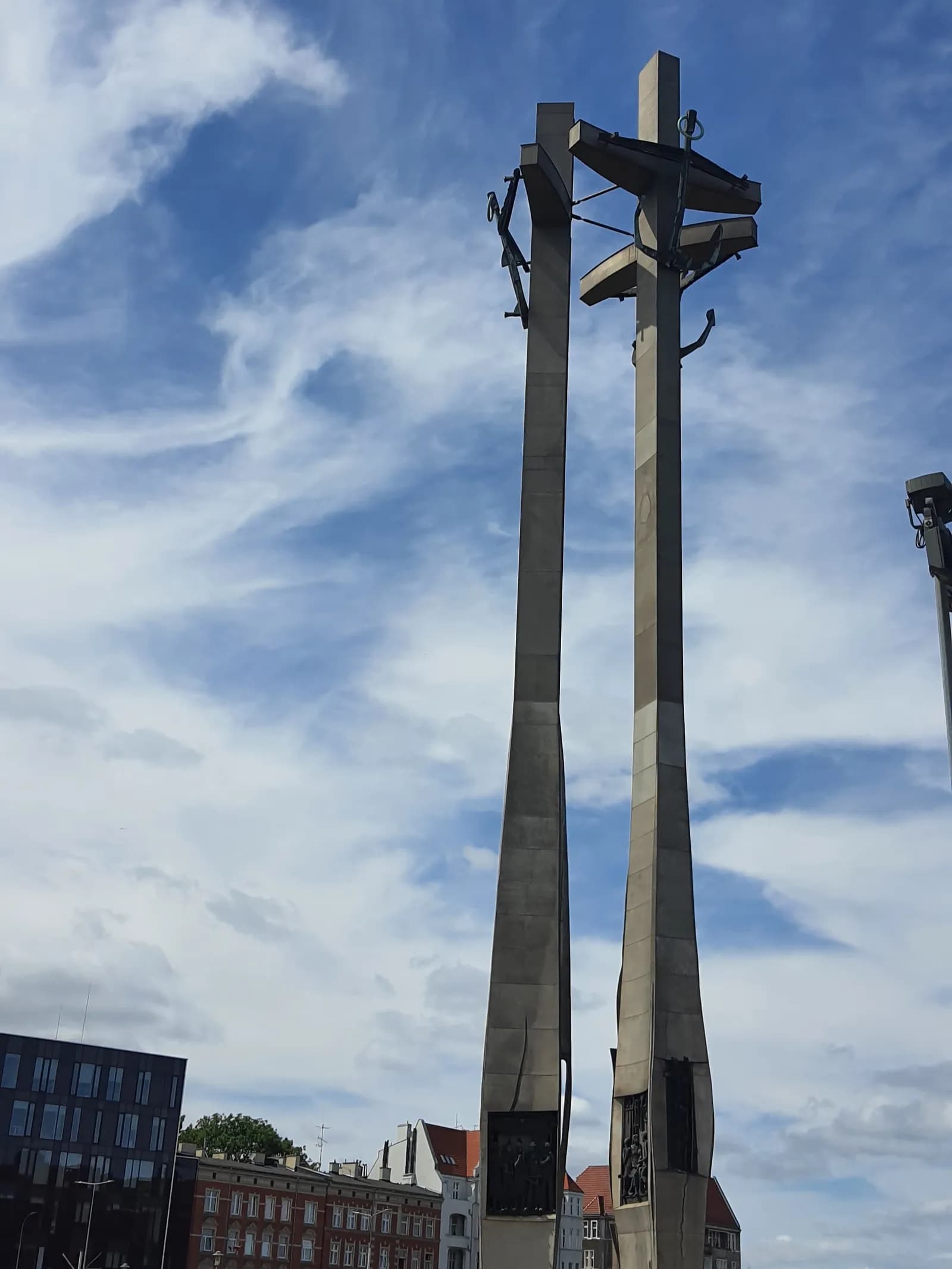
Today, the Monument to the Fallen Shipyard Workers of 1970, with its three tall crosses, stands beside the European Solidarity Centre.
It is worth noticing how closely the monument, shipyard gates and exhibition building are connected.
The strike of August 1980
The story most visitors associate with the Gdańsk Shipyard begins on 14 August 1980.
Workers went on strike following the dismissal of crane operator and activist Anna Walentynowicz. Lech Wałęsa, a former shipyard electrician and opposition activist, joined the strike and soon became its best-known leader.
What began as a dispute inside the shipyard quickly grew.
Workers from other workplaces joined the action and an Inter-Enterprise Strike Committee was established. The demands expanded beyond individual workplace grievances and became a broader programme for political and social change.
Among the demands were the right to form independent trade unions, the right to strike and greater freedom of expression.
The workers also demanded a monument commemorating those killed in 1970.
The 21 Demands
The list became known as the 21 Demands.
Written on wooden boards, the demands were displayed at the shipyard during the strike. They became one of the defining documents of the Solidarity movement.
Their importance is now recognised internationally. UNESCO included the 21 Demands in its Memory of the World programme, recognising their role in the creation of Solidarity and the wider transformation that followed.
Seeing the original documents and learning about the circumstances in which they were created gives visitors a sense of how quickly a workplace dispute developed into a national movement.
Gate No. 2
Outside the museum, Gate No. 2 is one of the places worth stopping at before or after visiting the exhibitions.
During the August strike, the gate became a meeting point between the striking workers inside and the people supporting them outside.
It was covered with religious images, flowers and messages. Supporters brought food, medicine and other supplies to the shipyard.
The gate also became an important source of information. People gathered outside to hear what was happening inside, while journalists and photographers documented the events.
Today, it remains one of the most recognisable symbols of the 1980 strike.
Standing there gives the museum visit a useful sense of scale. The events were not taking place in an abstract political arena. They were happening at the entrance to a working shipyard in the heart of Gdańsk.
From a shipyard strike to Solidarity
On 31 August 1980, representatives of the striking workers and the communist authorities signed the Gdańsk Agreement.
The agreement allowed the creation of an independent trade union, which became Solidarność, or Solidarity.
The movement grew extraordinarily quickly. Around 10 million people eventually became members.
Solidarity was no longer simply a shipyard organisation. It became a nationwide social movement, bringing together workers and citizens who wanted greater political and civil freedoms.
The European Solidarity Centre follows this transformation through the subsequent years, including the introduction of martial law in December 1981, the suppression of Solidarity and the development of underground opposition.
The road to 1989
The story does not end with the 1980 agreement.
The permanent exhibition continues through the years of martial law and underground opposition before reaching the political changes of 1989.
That year saw partially free elections in Poland and the formation of a government led by Tadeusz Mazowiecki.
The transformation in Poland was part of a much wider change taking place across Central and Eastern Europe. Later in 1989, the Berlin Wall fell and communist governments across the region began to collapse.
Seven sections inside the permanent exhibition
The permanent exhibition covers almost 3,000 square metres and is divided into seven sections.
Visitors move through the story from the origins of Solidarity and the August 1980 strike to martial law, the struggle for democracy and the movement's international legacy.
There are plenty of original objects and documents, but the exhibition also makes extensive use of photographs, film and audio as well as interactive installations. The result is an exhibition that feels accessible even if you arrive knowing little about the final years of communist Poland.
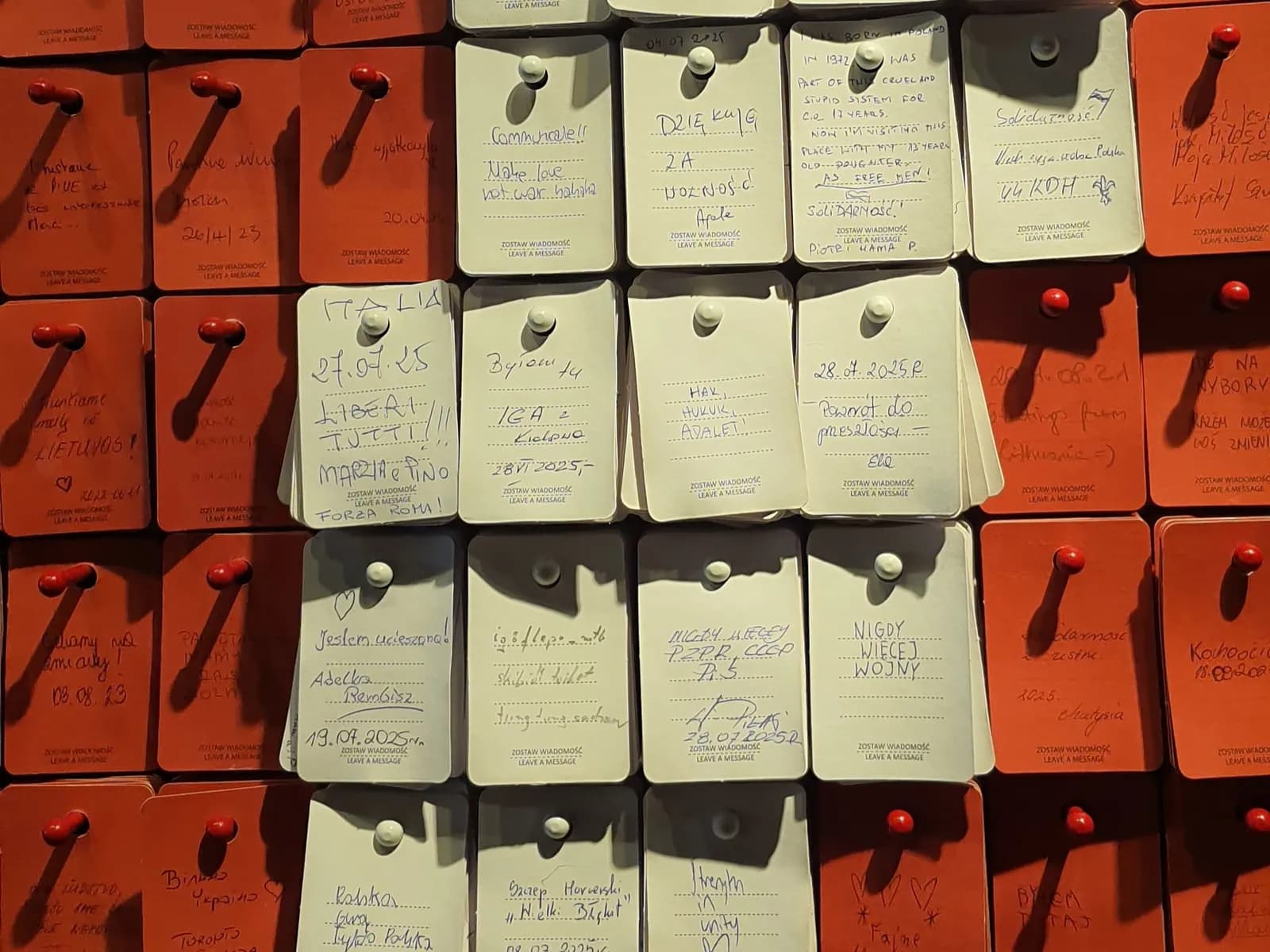
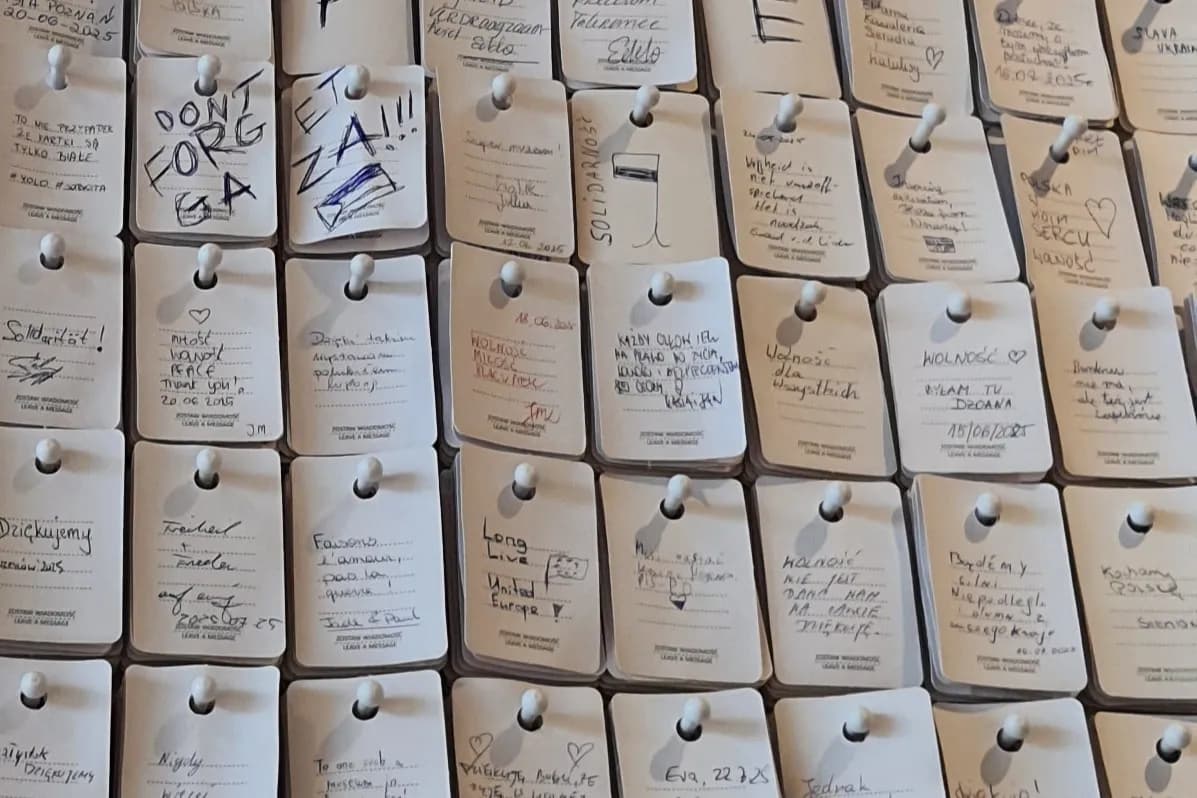
One of my favourite parts comes towards the end of the exhibition, where visitors are invited to leave a message of their own.
The messages become part of a huge SOLIDARNOŚĆ logo covering the wall. People leave words of thanks for freedom, hopes for peace, thoughts about justice and messages connected to conflicts and struggles taking place around the world.
It is a simple idea, but it changes the atmosphere of the room. After spending time learning about the people who stood up for their rights in Gdańsk, visitors are given the chance to add their own voice to the story.
The museum says that people come here to read the messages left by others, and that some are moved to tears. Looking at the wall, it is easy to understand why. The messages come from people of different generations and countries, turning what could have been the final room of a history exhibition into something much more personal.
For an international visitor, this is also a particularly memorable moment. The story that began with workers at a Gdańsk shipyard ends with people from around the world reflecting on what freedom means to them.
And, as the museum puts it, “We want your message to be seen too!”
So if you visit, leave one.
The Solidarity logo
The distinctive Solidarność logo is another familiar part of the story.
Created by Gdańsk graphic designer Jerzy Janiszewski, the design uses letters that appear to form a crowd, topped by the colours of the Polish flag.
It became one of the most recognisable political symbols of the 20th century.
The logo is a good example of how Solidarity developed its own visual language. Posters, photographs, banners and printed material helped create a sense of shared identity among people taking part in the movement.
A different way to understand Gdańsk
Gdańsk has no shortage of historic attractions, from the medieval Main Town to museums devoted to the Second World War and the city's maritime heritage.
The European Solidarity Centre adds another important layer.
It explains why Gdańsk became a centre of opposition to communist rule and how the city's shipyard workers helped create a movement that eventually influenced the political map of Europe.
For international visitors, it is also a useful introduction to a part of Polish history that is easy to overlook when travelling around the city.
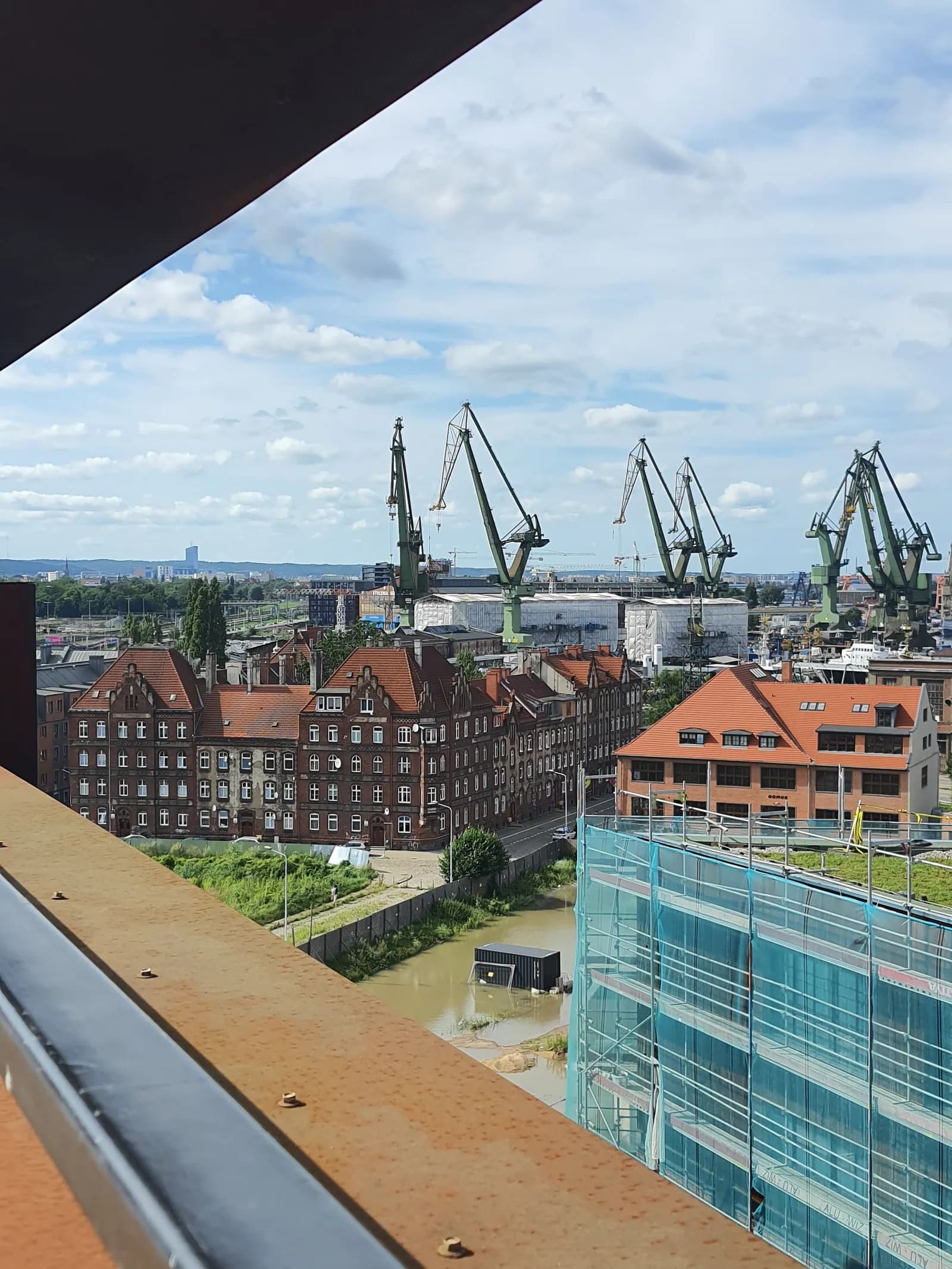
And for anyone who has already explored Gdańsk, a visit here can change the way the shipyard district looks. The cranes, gates, monuments and industrial buildings stop being simply part of the city's skyline and become pieces of a story that began long before today's Gdańsk took shape.
See more: Finding Peace in Oliwa Park, Gdańsk's Historic Garden Through the Seasons
Image credit: Author's private gallery